

Click here to access this and all of my other FREE resources!
There’s no magic formula for knowing exactly how much postpartum support you’ll need before your baby arrives. But there are some really helpful ways to get a pretty good idea.
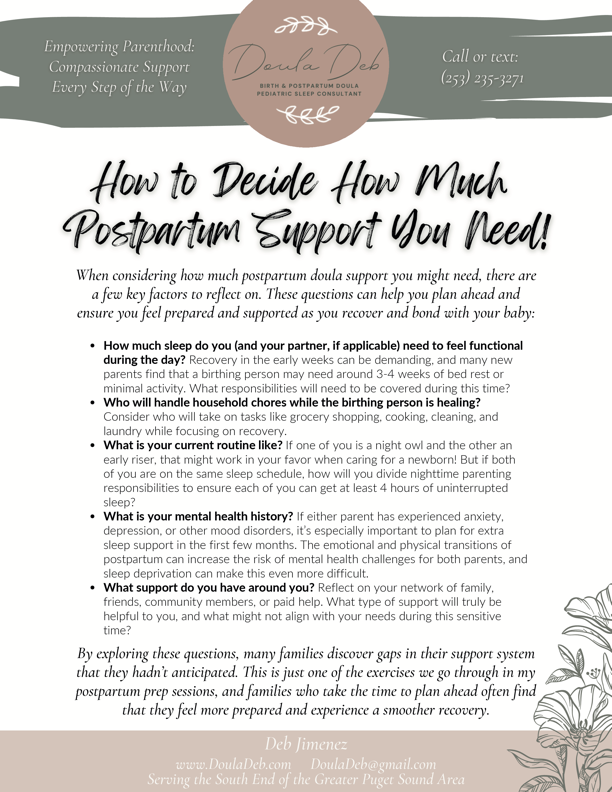
“How do I know how much help we’ll need?!” is one of the most common questions families ask me. So when I work with families, we talk through their unique dynamics: their strengths, their challenges, and everything in between. Those conversations led me to put together this list of questions to help you think through how much support you might need, and where it could come from.
1. How much sleep do you need to feel functional?
Think about yourself and your partner (if you have one). Are you a 10 to 12 hours a night kind of person? Or can you get by on 4 to 5 hours and still feel like yourself?
2. What do your current routines look like?
Is one of you a night owl and the other an early riser? That could actually work in your favor! If you’re both on the same schedule, think about how you’ll divide nights so each of you gets at least one solid stretch of uninterrupted sleep.
If you’re parenting solo, protecting your sleep and planning for regular breaks will be especially important. There’s no one to trade off with at 3 a.m., so think about who could cover a night or two each week, give you time to nap during the day, or simply hold the baby while you shower and eat.
3. What’s your mental health history?
If either parent has experienced anxiety, depression, or another mood disorder, protecting sleep and having extra emotional support in the early months is especially important. Sleep deprivation and the huge adjustment of new parenthood affect both parents, not just the one who gave birth.
4. How will the birthing parent get the rest they need?
Many people need several weeks of real rest after giving birth, spending a lot of that time in or near bed. What will need to be covered during that time? Think about work, errands, older kids, pets, and anything else that normally falls on the birthing parent.
5. Who will keep the household running?
Groceries, cooking, cleaning, laundry, and all the little things that keep a home going don’t stop just because there’s a newborn in the house. Who will handle these while you’re recovering?
6. What does your support network look like?
Do you have family, friends, or community who can step in? What kind of help is actually helpful to you, and what isn’t? It’s also worth thinking ahead about boundaries with visitors who mean well but might add stress instead of easing it.
These questions are a starting point to help you picture your own postpartum season and plan for the support that will make the biggest difference for your family.
There are plenty of unknowns with a new baby. But having the right kind of help, in the areas that matter most to your family, really does change the experience.
And if you don’t have a partner, this is the question to spend the most time on. Lining up a few reliable people for both day and overnight help can make a huge difference.
Want help working through this?
This is one of the exercises we do together prenatally in any consult session. Over and over, I’ve seen that families who take time to think this through ahead of time feel more prepared and have an easier time in those early weeks, because they’ve already lined up the rest and support they need.
You can learn more about those sessions and my other services here.